

French polishing in Perthshire
Traditional French polish and modern finishes, built up by hand until the grain shows through like water. This long plank-top table went back into its dining room with a shine you could read by.
Why a hand finish still matters
A French polish is shellac, laid on with a rubber in many thin coats. It gives the deep, warm glow you see on old mahogany and walnut, and it can be repaired later without stripping the whole piece.
Not every piece wants shellac. A kitchen table that sees hot mugs and homework may be better with a modern finish that shrugs off water. Craig does both, and will tell you which suits the way you live with the piece.
Recent finishes from the bench
Scroll sideways for more.
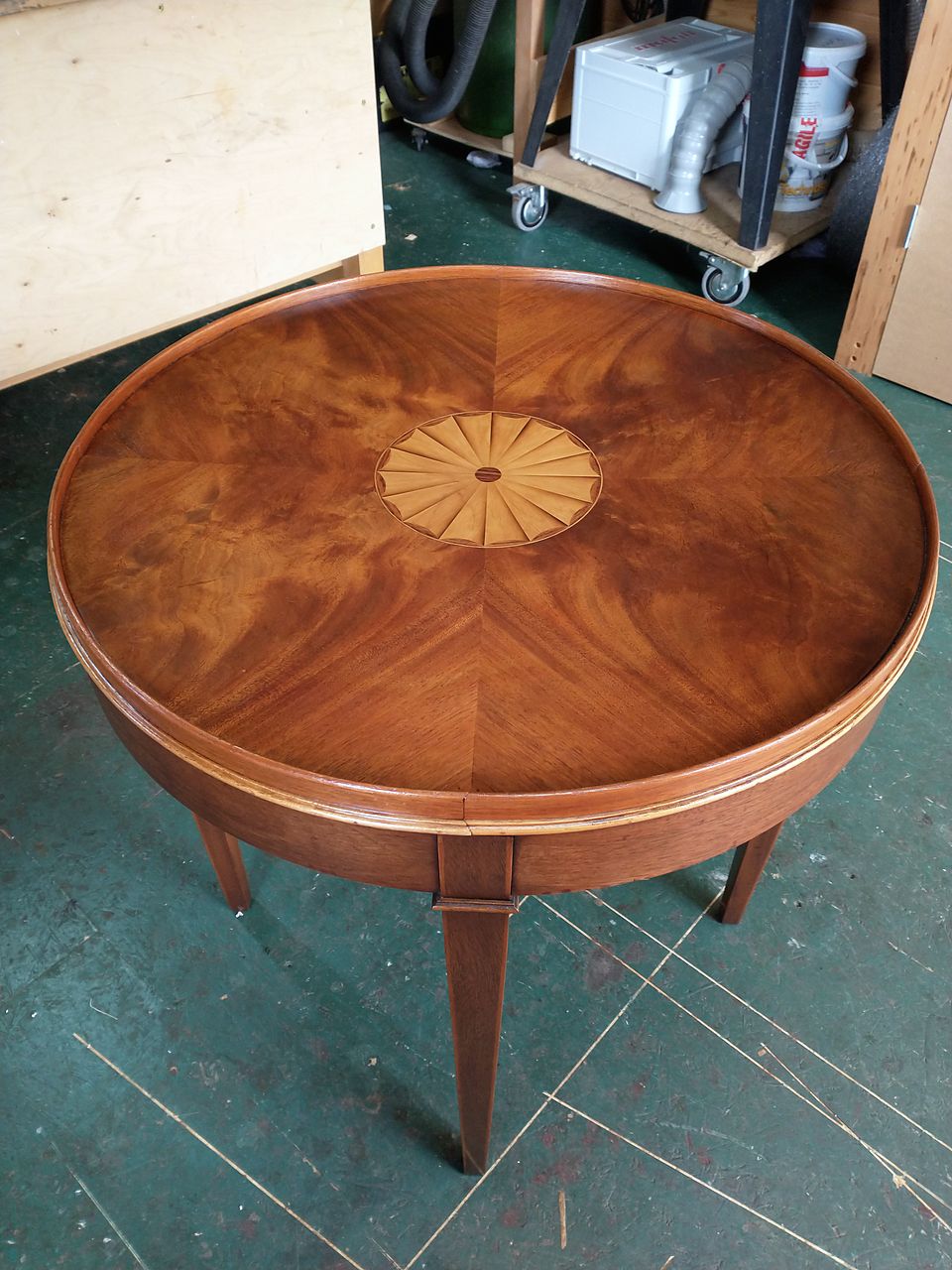
Sunburst-matched round table with an inlaid fan patera, freshly polished. 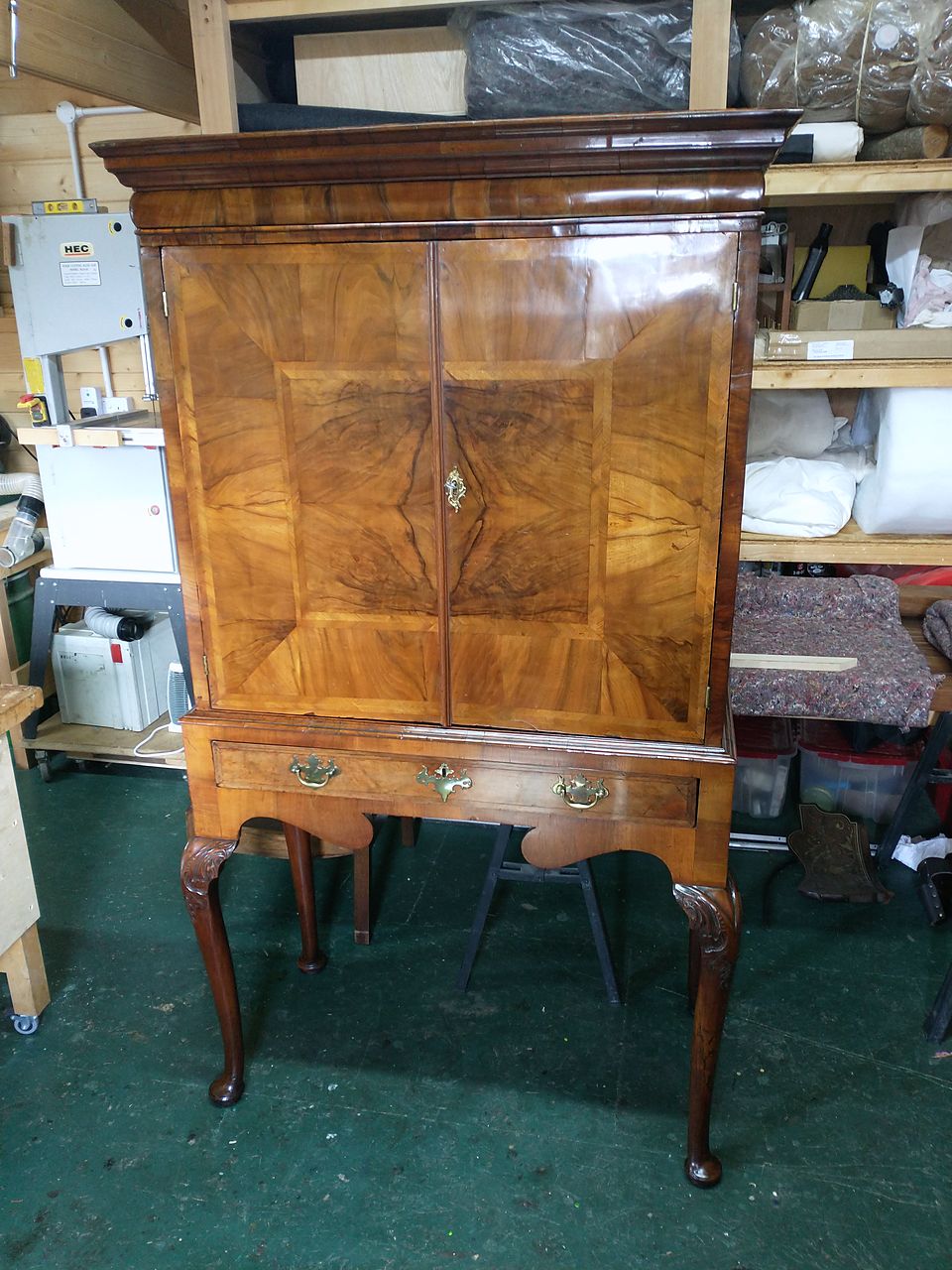
Cabinet on stand with figured veneer doors and cabriole legs. 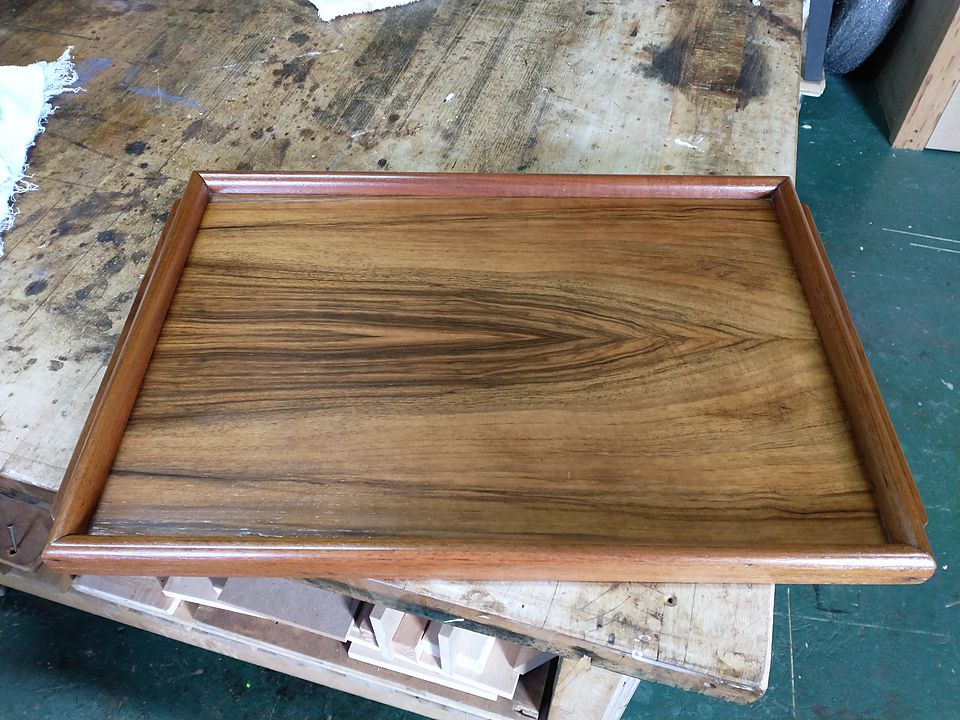
Gallery tray with a strongly figured veneer base. 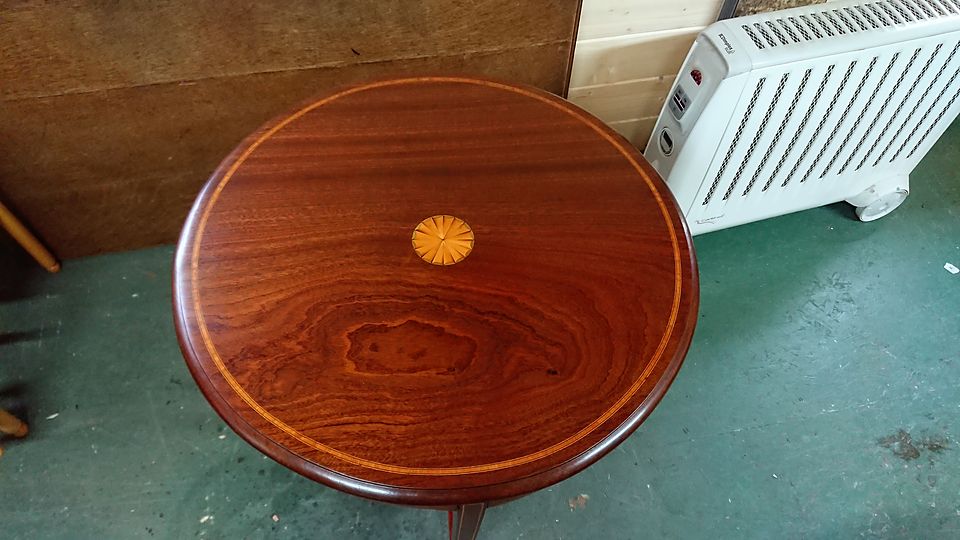
Occasional table top: fan patera, boxwood stringing, rich figure. 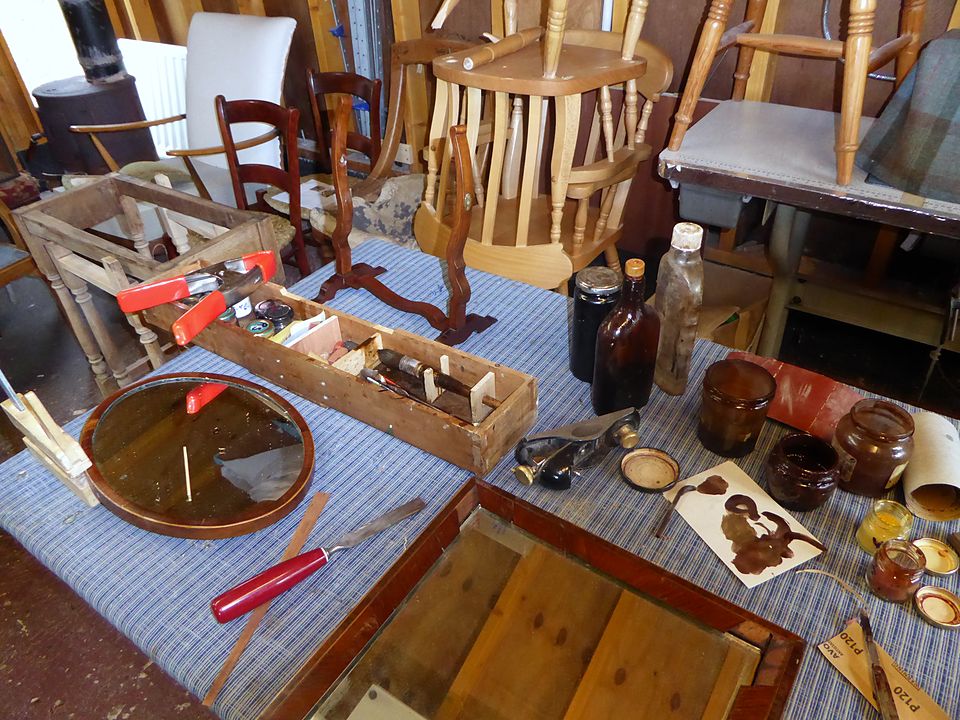
Polish jars, rubbers and a scraper mid-job on the bench.


Lifting veneer laid back down and polished


Traditional or modern finish
| Traditional French polish | Modern finish | |
|---|---|---|
| Looks like | Deep, warm, glassy glow that lets the figure show | Clear and even, from satin to gloss |
| Best for | Antiques, period pieces, veneered and inlaid work | Everyday tables and pieces that see heavy use |
| Living with it | Mats and coasters for heat and water | More forgiving of spills |
| Later repairs | Can be revived locally without stripping | Usually refinished over a wider area |

Ring marks, dull tops, sun-faded finish?
The quickest way to find out what a piece needs is a text with a few photos. Craig will look at them and get back to you.
Or, in his own words, "feel free to phone for an estimate or just for some advice."
- The whole piece, standing on its own feet
- The damage, close up, in good daylight
- Underneath a seat or the back of a carcase, if you can
- Any maker's label or stamp you find